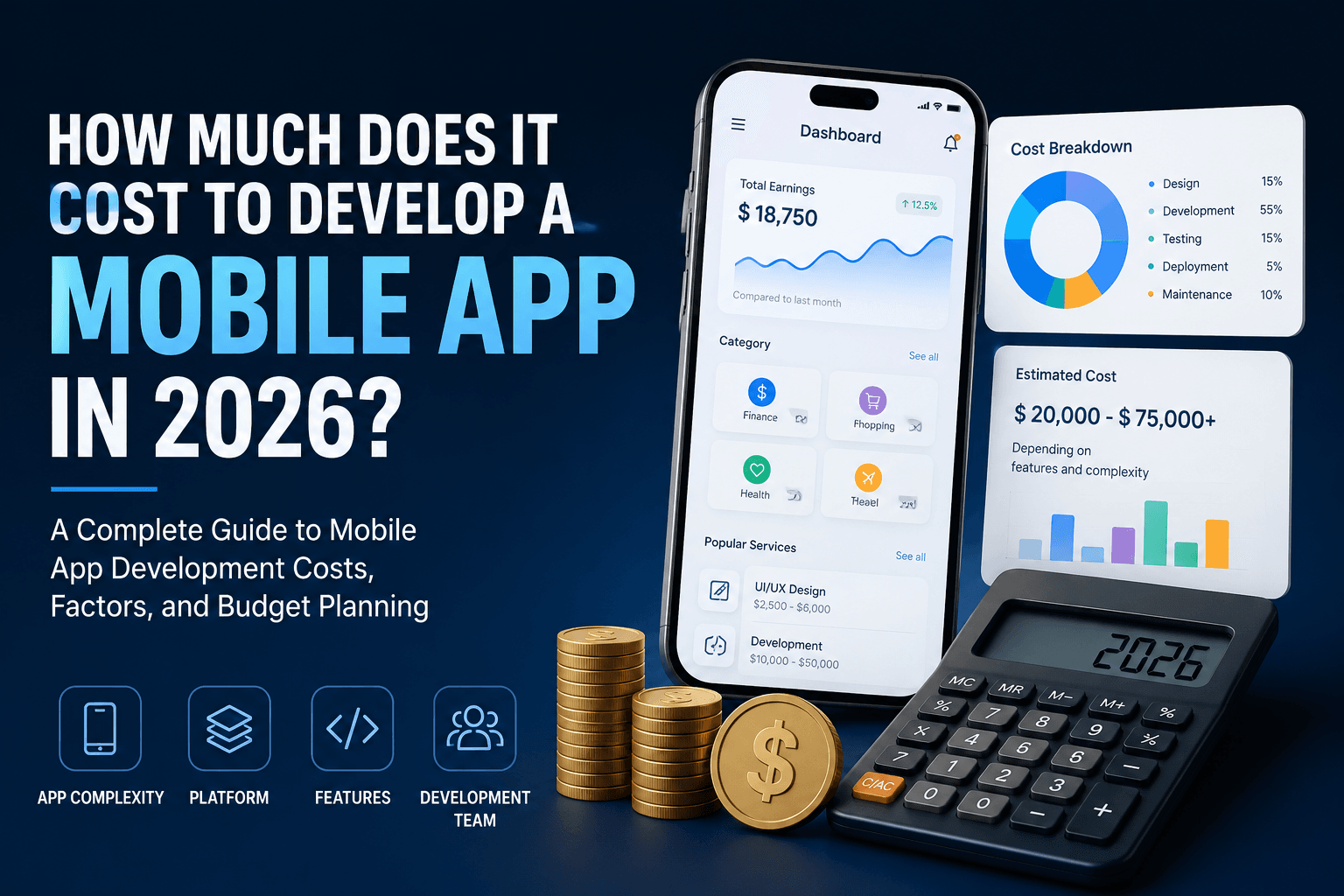
Mobile applications have become an essential part of modern business. Whether you run a startup, an eCommerce store, a healthcare company, a logistics business, or a large enterprise, having a mobile app can help improve customer engagement, increase revenue, and streamline operations.
One of the first questions business owners ask before starting an app project is: “How much does it cost to develop a mobile app in 2026?”
The answer depends on several factors, including app complexity, features, platform choice, design requirements, development team location, and ongoing maintenance. In this guide, we’ll break down everything you need to know about mobile app development costs in 2026 so you can plan your budget effectively.
Why Mobile Apps Are Worth the Investment
Before discussing costs, it’s important to understand why businesses continue investing in mobile applications.
Consumers spend several hours each day using mobile devices. Mobile apps provide a direct communication channel between businesses and customers. They improve user experience, increase customer loyalty, and create new revenue opportunities.
Benefits of mobile apps include:
- Improved customer engagement
- Faster communication with users
- Increased brand visibility
- Better customer retention
- Enhanced shopping experience
- Access to valuable user data
- Additional revenue streams
Because of these advantages, businesses of all sizes are investing in custom mobile applications.
Average Mobile App Development Cost in 2026
The cost of developing a mobile app varies significantly depending on project requirements.
Simple Mobile Apps
Simple applications usually include basic functionality such as:
- User registration
- Profile management
- Basic content display
- Simple navigation
- Minimal backend integration
Estimated Cost:
$5,000 to $20,000
Examples:
- Calculator apps
- Event information apps
- Basic business apps
- News applications
Medium Complexity Apps
Medium-sized applications require more advanced functionality.
Features may include:
- User authentication
- Push notifications
- Payment gateways
- API integrations
- Chat functionality
- Admin dashboard
Estimated Cost:
$20,000 to $75,000
Examples:
- Food delivery apps
- Fitness apps
- Appointment booking apps
- Learning management apps
Complex Mobile Apps
Complex applications require extensive development and advanced architecture.
Features may include:
- Real-time messaging
- Video streaming
- AI integration
- Location tracking
- Marketplace functionality
- Advanced analytics
- Cloud infrastructure
Estimated Cost:
$75,000 to $300,000+
Examples:
- Ride-sharing platforms
- Banking apps
- Social media platforms
- Large-scale eCommerce apps
Key Factors That Affect Mobile App Development Costs
1. App Complexity
Complexity remains the biggest factor influencing development costs.
A simple app with five screens will cost significantly less than an enterprise solution with hundreds of screens, user roles, integrations, and advanced security requirements.
The more functionality your application requires, the larger the budget will be.
2. Platform Selection
Businesses must decide whether to build:
- Android app
- iOS app
- Both platforms
- Cross-platform application
Android Development
Android applications are developed using:
- Kotlin
- Java
Cost Range:
$5,000 to $150,000+
iOS Development
iOS applications are built using:
- Swift
- SwiftUI
Cost Range:
$5,000 to $150,000+
Cross-Platform Development
Cross-platform frameworks allow developers to build a single codebase for both Android and iOS.
Popular frameworks include:
- Flutter
- React Native
Cost Range:
$8,000 to $200,000+
Many startups choose Flutter because it reduces development time and overall costs.
3. UI/UX Design Costs
User experience directly impacts app success.
Professional design includes:
- User research
- Wireframes
- User flows
- High-fidelity mockups
- Interactive prototypes
Design Cost Estimates:
- Basic Design: $1,000 to $5,000
- Professional Design: $5,000 to $20,000
- Enterprise Design: $20,000+
A well-designed application often achieves higher user retention and better app store ratings.
4. Backend Development Costs
Most modern applications require backend infrastructure.
Backend development may include:
- User management
- Database systems
- Authentication
- APIs
- Cloud storage
- Analytics
Backend Cost Estimates:
$3,000 to $100,000+
Applications with real-time features generally require more advanced backend systems.
5. Third-Party Integrations
Many apps integrate external services.
Common integrations include:
- Payment gateways
- Google Maps
- Social login
- SMS services
- Email platforms
- AI services
- CRM systems
Each integration adds development time and increases project costs.
6. App Security Requirements
Security is becoming increasingly important in 2026.
Businesses handling sensitive information must implement:
- End-to-end encryption
- Multi-factor authentication
- Secure APIs
- Data protection measures
- Compliance requirements
Additional security measures can significantly increase development budgets but are essential for protecting user data.
Mobile App Development Team Costs
Different professionals contribute to app development.
Project Manager
Responsibilities:
- Planning
- Timeline management
- Client communication
Typical Rates:
$25 to $100+ per hour
UI/UX Designer
Responsibilities:
- Interface design
- User experience optimization
Typical Rates:
$20 to $120+ per hour
Mobile Developer
Responsibilities:
- Coding
- Testing
- Feature implementation
Typical Rates:
$20 to $150+ per hour
Backend Developer
Responsibilities:
- Server architecture
- API development
- Database management
Typical Rates:
$25 to $150+ per hour
QA Engineer
Responsibilities:
- Testing
- Bug reporting
- Quality assurance
Typical Rates:
$15 to $80+ per hour
Development Costs by Region
Developer rates vary significantly around the world.
North America
Average Rate:
$100 to $250 per hour
Western Europe
Average Rate:
$60 to $180 per hour
Eastern Europe
Average Rate:
$30 to $100 per hour
South Asia
Average Rate:
$20 to $80 per hour
Many businesses choose experienced development agencies in South Asia because they can deliver high-quality solutions at competitive rates.
Hidden Costs of Mobile App Development
Many businesses focus only on development costs and overlook ongoing expenses.
App Store Fees
Apple App Store:
- Developer account fee
Google Play Store:
- One-time developer registration fee
Cloud Hosting
Applications require infrastructure for:
- Databases
- APIs
- Media storage
- Backups
Hosting costs typically range from $20 to several thousand dollars per month.
Maintenance and Updates
Apps require ongoing updates to:
- Fix bugs
- Improve performance
- Add new features
- Support new operating systems
Businesses should allocate approximately 15% to 25% of initial development costs annually for maintenance.
Marketing Costs
Even the best app needs promotion.
Marketing expenses may include:
- App Store Optimization (ASO)
- Social media campaigns
- Paid advertising
- Influencer partnerships
- Content marketing
AI-Powered Mobile Apps in 2026
Artificial intelligence is becoming a major component of mobile applications.
Popular AI features include:
- Chatbots
- Personalized recommendations
- Voice assistants
- Image recognition
- Predictive analytics
- Content generation
AI integration can increase development costs by $5,000 to $100,000+ depending on complexity.
However, AI-powered applications often provide a competitive advantage and enhanced user experience.
How to Reduce Mobile App Development Costs
Businesses can optimize costs without sacrificing quality.
Start with an MVP
A Minimum Viable Product (MVP) focuses on core features.
Benefits include:
- Lower initial investment
- Faster launch
- User feedback collection
- Reduced project risk
Use Cross-Platform Development
Frameworks like Flutter allow developers to build Android and iOS apps from a single codebase.
Benefits include:
- Faster development
- Lower costs
- Easier maintenance
Prioritize Essential Features
Avoid adding unnecessary features during the first release.
Launch quickly and improve the app based on real user feedback.
Partner with an Experienced Development Company
An experienced app development company can:
- Prevent costly mistakes
- Recommend cost-effective solutions
- Deliver projects faster
- Maintain high quality standards
What Is the ROI of Mobile App Development?
Many business owners focus on cost but overlook return on investment.
A successful mobile app can generate value through:
- Increased sales
- Subscription revenue
- Advertising income
- Customer retention
- Reduced operational costs
- Improved brand recognition
Companies that strategically invest in mobile applications often see significant long-term returns.
How Long Does Mobile App Development Take?
Timeline also impacts overall cost.
Simple Apps
Development Time:
1 to 3 months
Medium Complexity Apps
Development Time:
3 to 6 months
Complex Apps
Development Time:
6 to 18 months or more
Faster development often requires larger teams, which may increase project costs.
Choosing the Right Mobile App Development Partner
Selecting the right development company is one of the most important decisions you’ll make.
Look for:
- Proven portfolio
- Technical expertise
- Transparent pricing
- Positive client reviews
- Strong communication
- Post-launch support
A reliable development partner will help transform your idea into a successful product while keeping costs under control.
The cost of developing a mobile app in 2026 can range from a few thousand dollars for a simple application to several hundred thousand dollars for a large-scale enterprise platform. Factors such as app complexity, platform choice, design requirements, backend infrastructure, security, and ongoing maintenance all influence the final budget.
Businesses that carefully plan their projects, prioritize essential features, and work with experienced development teams can maximize their investment and create applications that deliver long-term value.
If you’re considering building a mobile application, the best approach is to define your goals, identify your target audience, and consult with an experienced mobile app development company to receive an accurate project estimate tailored to your needs.